
Two Great Options—But Which One Fits Your Property?
If you're a San Diego homeowner looking to add living space, rental income, or a place for family members, you've probably landed on two popular options: converting your existing garage into a living unit or building a brand-new detached accessory dwelling unit (ADU) in your backyard. Both are excellent investments, but they come with very different trade-offs.
At Alder ADU Specialists, we help homeowners across San Diego, La Jolla, Poway, Encinitas, and beyond navigate this exact decision every week. Here's an honest breakdown of what each option involves so you can move forward with clarity.
What Is a Garage Conversion?
A garage conversion transforms your existing attached or detached garage into a fully permitted living space. The exterior shell—walls, roof, and foundation—already exists, so the work focuses on upgrading the interior to meet residential building codes. That typically includes adding insulation, drywall, flooring, plumbing, electrical, HVAC, windows, and a bathroom or kitchenette.
Key Advantages of a Garage Conversion
- Lower cost: Because you're working within an existing structure, garage conversions generally cost significantly less than building from the ground up. Most San Diego garage conversions fall in the range of $80,000 to $150,000, depending on size and finishes.
- Faster timeline: With the shell already standing, construction typically takes 3 to 5 months after permits are approved—sometimes less.
- Smaller footprint impact: You're not adding a new structure to your lot, which means less disruption to your yard and landscaping.
- Streamlined permitting: California's ADU-friendly legislation has made garage conversions easier to permit. In many cases, local parking requirements are relaxed, and setback rules are more lenient for conversions than for new construction.
Potential Drawbacks
- You lose your garage: This is the obvious one. If you rely on your garage for parking, storage, or a workshop, you'll need to find alternatives.
- Layout limitations: You're working within the existing footprint. Most two-car garages are around 400 square feet, which is livable but compact. Ceiling height, window placement, and structural walls can limit your design options.
- Older structures may need upgrades: If your garage has foundation issues, an outdated electrical panel, or a roof that's past its prime, those repairs add to the budget.
What Is a Detached ADU?
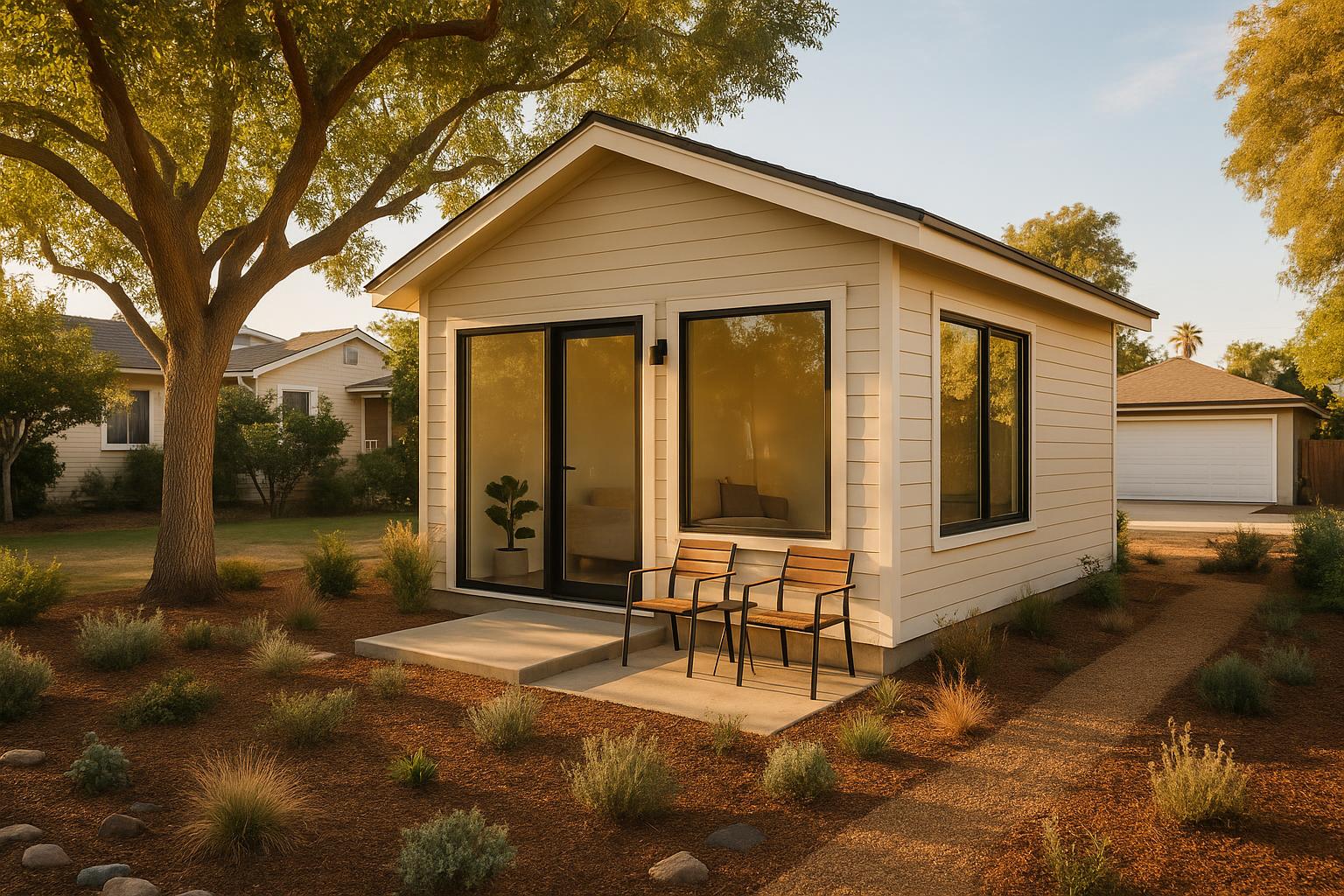
A detached ADU is a completely new, standalone structure built on your property—separate from your main house. Think of it as a small home with its own entrance, kitchen, bathroom, and living area. In San Diego, detached ADUs can be up to 1,200 square feet under current state regulations, giving you much more room to work with.
Key Advantages of a Detached ADU
- Design freedom: Starting from scratch means you can customize the layout, ceiling heights, window placement, and finishes to match exactly what you need—whether that's a one-bedroom rental, a two-bedroom guest house, or a home office suite.
- Greater privacy: A separate building in the backyard offers more separation between the main house and the ADU, which is ideal for renters or family members who value independence.
- Higher rental income potential: A larger, purpose-built unit with modern finishes typically commands higher rent than a converted garage. In neighborhoods like Encinitas, Del Mar, and Carlsbad, well-designed ADUs can generate $2,500 to $4,000 or more per month.
- Better property value boost: Appraisers and buyers tend to assign more value to a standalone structure with its own systems and dedicated living space.
Potential Drawbacks
- Higher cost: New construction means new foundation, framing, roofing, utility connections, and site work. Detached ADUs in San Diego typically range from $150,000 to $350,000 depending on size, site conditions, and finishes.
- Longer timeline: Between design, permitting, and construction, expect 8 to 14 months from start to finish.
- Yard space: You'll be giving up a portion of your backyard. On smaller lots, this can be a significant consideration for families who use outdoor space regularly.
- Utility connections: Running sewer, water, electrical, and gas lines to a new structure adds cost—especially if the build site is far from existing connections.
How to Decide: Five Questions to Ask Yourself
Every property and every family is different. Here are five questions that can help you narrow down the right path:
- Do you actually use your garage? If your garage is mostly storage overflow, a conversion might be a no-brainer. If you park two cars inside every night, think carefully before giving that up.
- How much space do you need? If a studio or one-bedroom around 400 square feet works, a garage conversion is efficient and cost-effective. If you need a full one- or two-bedroom unit with a real kitchen and living room, a detached ADU gives you the square footage.
- What's your budget? Be honest about what you can spend. A garage conversion lets you add a permitted living unit at a lower price point, while a detached ADU is a bigger investment with a bigger return.
- What's your timeline? If you need the space quickly—say, for an aging parent or to start generating rental income—a conversion's shorter timeline could be the deciding factor.
- What does your lot allow? Lot size, setbacks, easements, slope, and existing structures all affect what's feasible. Some properties in hilly parts of Poway or La Jolla have site conditions that make new construction more complex, while a flat lot in Carlsbad might be perfect for a detached build.
San Diego Permitting: What You Should Know
California has passed several laws—including SB 9, AB 68, and AB 881—that make it easier than ever to build ADUs. San Diego's Development Services Department has created a relatively streamlined process for both garage conversions and detached ADUs, but the details matter. Setback requirements, lot coverage limits, fire sprinkler rules, and utility capacity all vary depending on your specific property and zoning.
This is where working with a team that handles permitting daily makes a real difference. At Alder ADU Specialists, we manage the entire permit process so homeowners don't have to decode municipal code or chase down plan corrections on their own.
Can You Do Both?
Here's something many homeowners don't realize: California law allows most single-family properties to have both a detached ADU and a junior ADU (JADU) or converted garage unit. If your lot and budget support it, you could potentially add two income-producing units to your property. It's not the right move for everyone, but it's worth exploring if maximizing rental income or multigenerational living is your goal.
The Bottom Line
There's no universally right answer—only the right answer for your property, your family, and your budget. A garage conversion offers a faster, more affordable path to a livable space. A detached ADU gives you more design control, more square footage, and typically a stronger return on investment.
If you're weighing your options and want a professional opinion based on your specific lot, we're happy to help. Alder ADU Specialists offers free consultations for homeowners throughout San Diego County. We'll walk your property, discuss your goals, and give you a clear picture of what's realistic—before you commit to anything.